







CAIRO, SEPTEMBER 22(SEE): The innovator for one of the greatest cartoon production companies in history, Walt Disney wasn’t always encouraged, nor supported to fulfill his long time dream and open the gladiator company seen today. In fact the Mickey and Minnie creator was told straight out that he lacked creativity and original ideas. In fact he was fired from a Missouri newspaper for "not being creative enough."
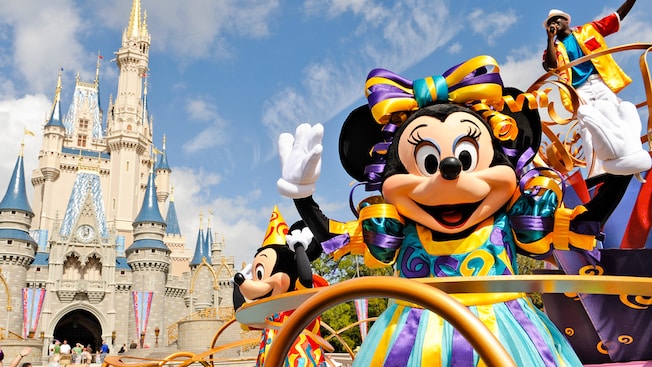
Walt Disney was born on December 5, 1901, in Chicago, Illinois. He lived most of his childhood in Marceline, Missouri, where he began drawing, painting and selling pictures to his neighbors and friends. Disney attended McKinley High School in Chicago, where he took drawing and photography classes and was a contributing cartoonist for the school paper

In 1919, Disney moved to Kansas City to pursue a career as a newspaper artist. His brother Roy got him a job at the Pesmen-Rubin Art Studio, where he met cartoonist Ubbe Eert Iwwerks. From there on, Disney worked at the Kansas City Film Ad Company, where he made commercials based on cutout animation. Around this time, Disney decided to open his own animation business.

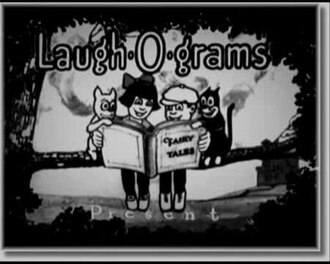
Disney made a deal with a local Kansas City theater to screen their cartoons, which they called “Laugh-O-Grams”. The cartoons were hugely popular, and Disney was able to acquire his own studio. Laugh-O-Gram hired a number of employees, including Harman's brother Hugh and Iwerks. They did a series of seven-minute fairy tales that combined both live action and animation, which they called Alice in Cartoonland. By 1923, however, the studio became burdened with debt, and was forced to declare bankruptcy.
Disney and his brother Roy soon pooled their money and moved to Hollywood. Iwerks also relocated to California, and there the three began the Disney Brothers' Studio. Their first deal was with New York distributor Margaret Winkler, to distribute their Alice cartoons. They also invented a character called Oswald the Lucky Rabbit.
A few years later, Disney discovered that Winkler and her husband, Charles Mintz, had stolen the rights to Oswald, along with all of Disney’s animators, except for Iwerks. Right away the Disney brothers, their wives and Iwerks produced three cartoons featuring a new character Walt had been developing called Mickey Mouse. The first animated shorts featuring Mickey were Plane Crazy and The Gallopin' Gaucho, both silent films for which they failed to find distribution. When sound made its way into film, Disney created a third, sound-and-music-equipped short called Steamboat Willie. With Disney voicing Mickey Mouse and the cartoon became a great hit.

In 1929, Disney created Silly Symphonies, which featured Mickey's newly created friends, including Minnie Mouse, Donald Duck, Goofy and Pluto. One of the most popular cartoons, Flowers and Trees, was the first to be produced in color and to win an Oscar. In 1933, The Three Little Pigs and its title song "Who's Afraid of the Big Bad Wolf?" became a theme for the country in the midst of the Great Depression.
On December 21, 1937, Snow White and the Seven Dwarfs, the first full-length animated film, premiered in Los Angeles. It produced an unimaginable $1.499 million, in spite of the Depression, and won a total of eight Oscars. During the next five years, Walt Disney Studios completed another string of full-length animated films, Pinocchio (1940), Fantasia (1940), Dumbo (1941) and Bambi (1942).

In December 1939, a new campus for Walt Disney Studios was opened in Burbank. A setback for the company occurred in 1941, however, when there was a strike by Disney animators. Many of them resigned, and it would be years before the company fully recovered. During the mid-1940s, Disney created "packaged features," groups of shorts strung together to run at feature length, but by 1950, he was once again focusing on animated features. Cinderella was released in 1950, followed by a live-action film called Treasure Island (1950), Alice in Wonderland (1951), Peter Pan (1953), Lady and the Tramp (1955), Sleeping Beauty (1959) and 101 Dalmatians (1961). In all, more than 100 features were produced by his studio.
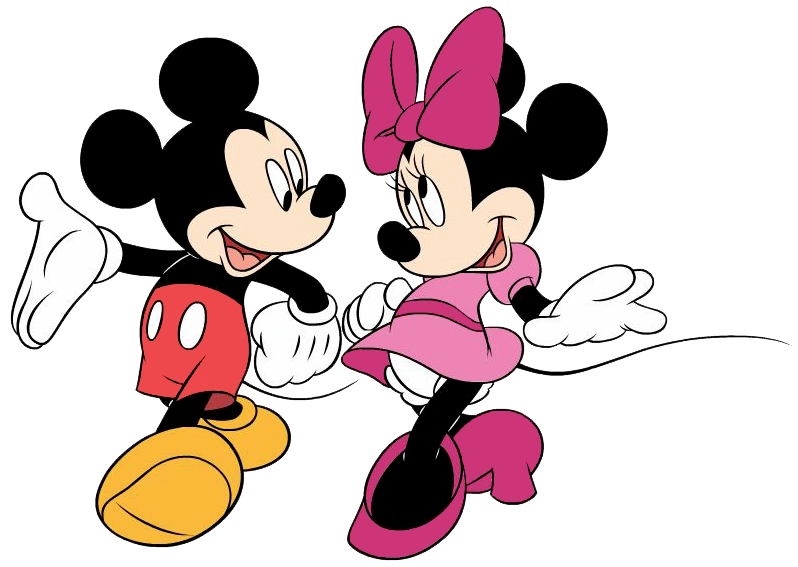
Disney was also among the first to use television as an entertainment medium. The Zorro and Davy Crockett series were extremely popular with children, as was The Mickey Mouse Club, a variety show featuring a cast of teenagers known as the Mouseketeers. The creator of Mickey and Minnie Mouse went on to be nominated for 59 Academy Awards, winning 32, all for his unparalleled animations. He still holds the record for the most Oscars won by an inpidual. Disney died on December 15, 1966.

Walt Disney will always be remembered for his many successes, but he also saw his share of hard failures including a bankruptcy, a mental breakdown, a devastating strike, and the loss of control over his creation Oswald the Lucky Rabbit.
He once said, “You may not realize it when it happens, but a kick in the teeth may be the best thing in the world for you.” There are advantages to failure, in other words. As Walt himself put it: “It is good to have a failure while you’re young because it teaches you so much. For one thing it makes you aware that such a thing can happen to anybody, and once you’ve lived through the worst, you’re never quite as vulnerable afterward.”
Credits:
Blogs Article.com
Biography.com
Walt Disney.com

 Follow the latest news on Google News


